

The UK creative industry is one of the most vibrant in the world, contributing billions to the British economy every year. However, as we move through 2026, the landscape is shifting. For new graduates entering the design world in cities like London, Manchester, and Bristol, the “old way” of doing things is no longer enough.
Artificial Intelligence (AI) has moved from being a futuristic concept to a daily tool. From automating repetitive tasks to sparking new creative ideas, AI is changing how we work. But for a new designer, this brings up a big question: How do you stay relevant?
This guide explores how AI is reshaping the UK design sector and what graduates need to do to stay ahead of the competition.
1. The End of “Pixel Pushing”
In the past, junior designers spent hours on “pixel pushing”—tasks like resizing images, removing backgrounds, or adjusting layouts for different screen sizes. Today, AI tools like Adobe Firefly and Canva’s Magic Studio handle these tasks in seconds.
For a UK graduate, this is actually good news. It means you are no longer tied to the “boring” parts of design. Instead, you can focus on Creative Strategy. UK agencies are now looking for designers who can think about the “Why” behind a design, not just the “How.”
2. Bridging the UK Skills Gap
Despite the rise of AI, many UK university courses are still catching up. There is a “skills gap” between what is taught in the lecture theatre and what is needed in a professional agency.
To bridge this gap, you must take control of your own learning. It isn’t just about knowing how to use Photoshop anymore; it’s about understanding how to prompt AI, how to manage data-driv en design, and how to integrate automation into your workflow. Mastering specific AI skills is now the single best way to make your CV stand out in a crowded job market.
3. Why Human Creativity Matters More Than Ever
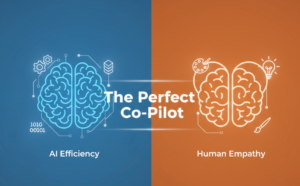
You might worry that AI will replace designers. In the UK, the consensus among industry leaders is the opposite: AI is a “co-pilot,” not the pilot.
AI is great at following patterns, but it lacks empathy and cultural context. It doesn’t understand British humour, the specific vibes of a Shoreditch start-up, or the traditional aesthetics of a heritage brand in the Cotswolds. Your value as a human designer lies in your ability to connect with people on an emotional level—something a machine cannot do.
4. Managing the Pressure of Your Final Year
Entering the industry is exciting, but the journey there is often stressful. For many UK students, the final year of a design degree is a “crunch time” where you have to build a world-class portfolio while also finishing long essays and theoretical modules.
This is where smart time management becomes vital. You cannot be a great designer if you are burnt out by paperwork. Some students choose to delegate their non-core modules so they can focus entirely on their creative projects. If you find yourself overwhelmed by the workload, you might look for professional support to pay someone to take my online class. This allows you to spend your best energy on the work that actually gets you hired.
5. The Future of Design Agencies in London and Beyond
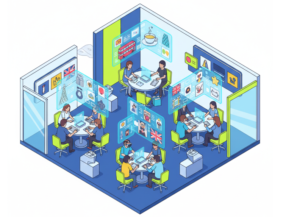
The “Agency of the Future” in the UK looks very different than it did five years ago. Teams are smaller, faster, and more tech-savvy.
- Generative Ideation: Using AI to create 50 different mood board ideas in ten minutes.
- Rapid Prototyping: Turning a sketch into a working digital model instantly.
- Hyper-Personalisation: Creating different versions of an ad for every city in the UK automatically.
To get a seat at the table in these agencies, you need to show that you are an “AI-Enhanced Designer.” Use your portfolio to show not just the final result, but the process of how you used technology to get there.
6. Practical Tips for UK Graduates
If you are graduating this year, here is your “survival list” for the 2026 job market:
- Build a Tech-First Portfolio: Show projects where you used AI for research or initial sketches.
- Learn the Business of Design: Understand how your work makes money for a client.
- Network Locally: Attend design meetups in your city. The UK design community is very supportive.
- Protect Your Time: Don’t let boring assignments stop you from learning the high-value skills that matter.
Conclusion
The “Game” hasn’t just changed; it has been completely rewritten. For new designers in the UK, AI is the ultimate power-up. It levels the playing field, allowing a single graduate to produce work that used to require a whole team.
By focusing on your unique human creativity and using the right tools and support systems to manage your time, you won’t just survive the transition into the professional world—you will lead it.
Author Bio:
Joe Kerry is a senior educational consultant and career coach based in the UK. With over a decade of experience in helping graduates navigate the competitive British job market, Joe specialises in bridging the gap between university studies and professional creative roles.