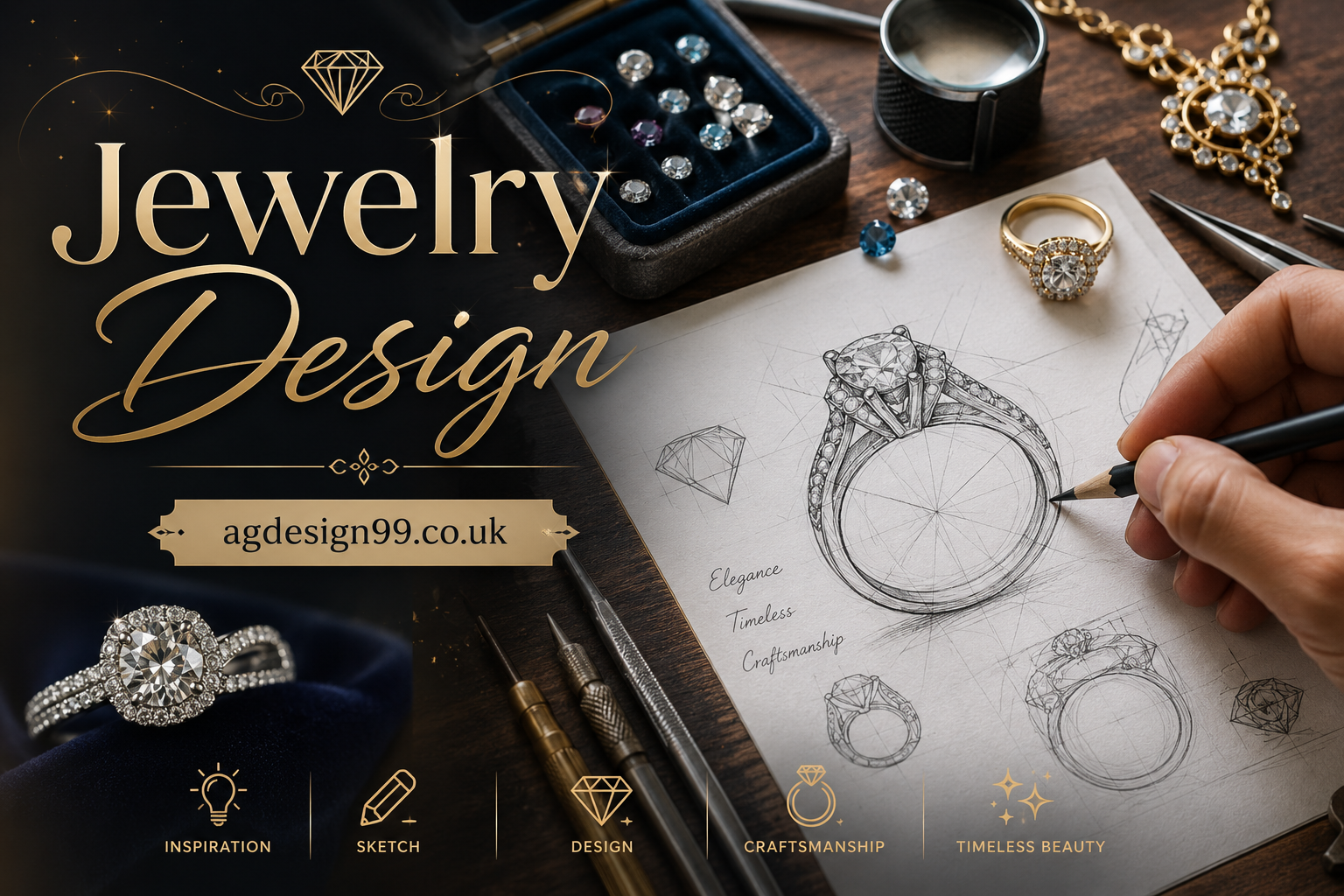
Jewelry design is the process of creating wearable decorative items such as rings, necklaces, earrings, bracelets, brooches, and pendants. It combines creativity with technical knowledge to produce beautiful and functional accessories.
A jewelry designer must consider:
- Aesthetic appeal
- Comfort and wearability
- Material selection
- Durability
- Manufacturing methods
The goal is not only to create something visually attractive but also to ensure it can be worn comfortably and last for years.
The History of Jewelry Design
Jewelry design dates back thousands of years. Ancient civilizations used shells, stones, bones, and metals to create ornaments that symbolized status, power, or spirituality.
Ancient Egypt
The Egyptians crafted elaborate gold jewelry decorated with gemstones and symbolic motifs such as scarabs and lotus flowers.
Ancient Greece and Rome
Greek and Roman artisans introduced advanced metalworking techniques and intricate gemstone settings.
Middle Ages
Religious symbols became popular during medieval times, while precious gems gained greater significance.
Renaissance Era
The Renaissance sparked creativity in jewelry design with detailed craftsmanship and artistic innovation.
Modern Era
Today, jewelry design combines traditional skills with technologies like 3D modeling and computer-aided design (CAD).
Why Jewelry Design Matters
Jewelry is more than fashion. It often represents emotions, memories, and identity.
People wear jewelry to:
- Celebrate engagements and weddings
- Express personal style
- Mark achievements
- Preserve family traditions
- Showcase cultural heritage
A carefully designed piece can become a treasured heirloom passed down through generations.
Essential Principles of Jewelry Design
Successful jewelry design follows several fundamental principles.
Balance
The visual weight of elements should feel harmonious. Symmetrical and asymmetrical designs both create balance in different ways.
Proportion
The size of gemstones, metal components, and decorative elements should work together naturally.
Contrast
Combining textures, colors, and shapes adds visual interest.
Unity
All elements should feel connected to create a cohesive design.
Emphasis
A focal point, such as a gemstone or unique pattern, draws attention.
These principles help designers create attractive and wearable pieces.
Sources of Inspiration in Jewelry Design
Design inspiration comes from many places.
Nature
Flowers, leaves, oceans, stars, and animals often inspire elegant jewelry collections.
Architecture
Buildings and geometric structures influence modern jewelry styles.
Culture and History
Traditional motifs and cultural symbols inspire unique creations.
Personal Stories
Many custom jewelry pieces reflect life events, relationships, or cherished memories.
The best jewelry designs often carry emotional meaning beyond their visual beauty.
Popular Types of Jewelry Design
Jewelry design covers many categories.
Ring Design
Rings symbolize love, commitment, and style. Engagement rings remain among the most requested custom designs.
Necklace Design
Necklaces range from minimalist chains to statement pieces featuring gemstones.
Earring Design
Studs, hoops, drops, and chandelier earrings offer endless possibilities.
Bracelet Design
Bracelets can be elegant, casual, or symbolic.
Pendant Design
Personalized pendants often include initials, symbols, or meaningful shapes.
Each category presents unique creative challenges.
Materials Used in Jewelry Design
The choice of materials significantly impacts appearance, durability, and value.
Precious Metals
Gold
Available in yellow, white, and rose variations.
Silver
Affordable and versatile for everyday wear.
Platinum
Highly durable and luxurious.
Gemstones
Popular gemstones include:
- Diamond
- Sapphire
- Emerald
- Ruby
- Opal
- Amethyst
Alternative Materials
Modern designers also use:
- Titanium
- Stainless steel
- Resin
- Wood
- Ceramic
The right material depends on style, budget, and intended use.
Understanding Gemstone Selection
Choosing gemstones involves several factors.
The Four Cs of Diamonds
Cut
Determines brilliance and sparkle.
Color
Measures the presence or absence of color.
Clarity
Refers to internal imperfections.
Carat
Indicates gemstone weight.
Colored gemstones require evaluation of hue, saturation, and transparency.
Good gemstone selection enhances beauty while ensuring durability.
The Jewelry Design Process
Creating jewelry involves multiple stages.
Concept Development
Designers begin with ideas, sketches, and inspiration boards.
Sketching
Hand drawings help visualize shapes and details.
CAD Modeling
Computer software creates precise digital models.
Prototype Creation
Wax models or 3D prints allow testing before production.
Casting and Manufacturing
Metal casting transforms designs into physical pieces.
Stone Setting
Gemstones are carefully secured.
Finishing
Polishing and quality checks complete the piece.
Every stage requires precision and expertise.
Handcrafted vs. Mass-Produced Jewelry
Consumers often choose between handcrafted and mass-produced jewelry.
Handcrafted Jewelry
Benefits include:
- Unique designs
- High craftsmanship
- Personal customization
Mass-Produced Jewelry
Advantages include:
- Lower cost
- Faster production
- Wide availability
Handcrafted jewelry often carries greater emotional and artistic value.
The Rise of Custom Jewelry Design
Custom jewelry has become increasingly popular.
People want pieces that reflect their personalities and stories. Custom design allows customers to select:
- Metals
- Gemstones
- Engravings
- Shapes
- Settings
This personalization creates meaningful keepsakes that cannot be easily replicated.
Modern Jewelry Design Trends
The jewelry industry constantly evolves.
Minimalist Jewelry
Simple and elegant pieces remain highly popular.
Sustainable Jewelry
Consumers increasingly seek ethical sourcing and recycled materials.
Mixed Metals
Combining gold and silver creates versatile looks.
Personalized Jewelry
Initials, birthstones, and custom engravings continue to grow in demand.
Vintage Revival
Retro-inspired designs attract buyers who appreciate timeless aesthetics.
Trends may change, but craftsmanship remains essential.
Sustainable and Ethical Jewelry Design
Sustainability has become a major focus.
Ethical jewelry design emphasizes:
- Conflict-free gemstones
- Recycled metals
- Responsible sourcing
- Fair labor practices
Consumers today often value transparency alongside beauty.
Brands that prioritize sustainability build stronger trust with customers.
Technology in Jewelry Design
Technology is transforming the industry.
CAD Software
Computer-aided design allows precise digital creation.
3D Printing
Rapid prototyping speeds up production.
Laser Engraving
Detailed customization becomes easier.
Virtual Try-On Tools
Customers can preview jewelry before purchasing.
These innovations improve efficiency while expanding creative possibilities.
How to Become a Jewelry Designer
A career in jewelry design combines creativity and technical skill.
Aspiring designers often study:
- Jewelry design
- Gemology
- Metalworking
- CAD software
Building a portfolio is essential for attracting clients or employers.
Many successful designers continuously learn new techniques to remain competitive.
Common Jewelry Design Styles
Several styles dominate the industry.
Classic
Timeless elegance with clean lines.
Vintage
Inspired by historical periods.
Modern
Minimalist and contemporary aesthetics.
Art Deco
Bold geometric patterns and symmetry.
Bohemian
Organic, colorful, and artistic elements.
Understanding styles helps customers choose pieces that suit their personalities.
Jewelry Design for Special Occasions
Jewelry often marks life’s important moments.
Examples include:
- Engagements
- Weddings
- Anniversaries
- Graduations
- Birthdays
Designers create pieces that preserve memories and celebrate milestones.
These emotional connections make jewelry especially meaningful.
Caring for Designed Jewelry
Proper care extends jewelry lifespan.
Helpful practices include:
- Store pieces separately
- Clean regularly
- Avoid harsh chemicals
- Remove jewelry during physical activities
Professional inspections help maintain gemstone security and structural integrity.
Good maintenance preserves beauty for generations.
Challenges in Jewelry Design
Designers face many challenges.
Balancing creativity with practicality can be difficult. Materials fluctuate in price, trends change quickly, and customer expectations continue evolving.
Successful designers combine artistic vision with problem-solving skills.
Adaptability remains crucial in a competitive market.
The Future of Jewelry Design
The future of jewelry design looks exciting.
Artificial intelligence, sustainable sourcing, and advanced manufacturing technologies are reshaping the industry.
Consumers increasingly seek authenticity and personalization.
Designers who combine innovation with craftsmanship will continue to thrive.
Despite technological advances, human creativity remains at the heart of exceptional jewelry design.
Why Jewelry Design Will Always Matter
Jewelry design is more than creating accessories. It is about preserving emotions, celebrating milestones, and expressing individuality.
A beautifully designed piece can tell a story without words.
As trends evolve and technologies advance, the essence of jewelry remains unchanged: creating meaningful objects people cherish for a lifetime.
Conclusion
Jewelry design sits at the intersection of art, tradition, and innovation. From ancient civilizations to modern digital workshops, the craft has evolved while preserving its emotional significance. Whether you admire fine gemstones, appreciate handmade artistry, or dream of designing your own collection, jewelry design continues to inspire people across generations. In a world where trends constantly change, meaningful and beautifully crafted jewelry remains timeless.
FAQs
1. What is jewelry design?
Jewelry design is the process of creating decorative wearable items using metals, gemstones, and artistic techniques.
2. What skills are needed for jewelry design?
Creativity, sketching, metalworking, gemstone knowledge, and CAD software skills are highly valuable.
3. Which metal is best for jewelry?
Gold, platinum, and silver are popular choices, each offering unique benefits in durability and appearance.
4. What is custom jewelry design?
Custom jewelry design allows customers to create personalized pieces based on their preferences and stories.
5. How does CAD help jewelry designers?
CAD software enables precise digital modeling, faster revisions, and accurate manufacturing.
Read also: Latest Painting Directory Arcyhist Modern Art and Creative Design Trends