
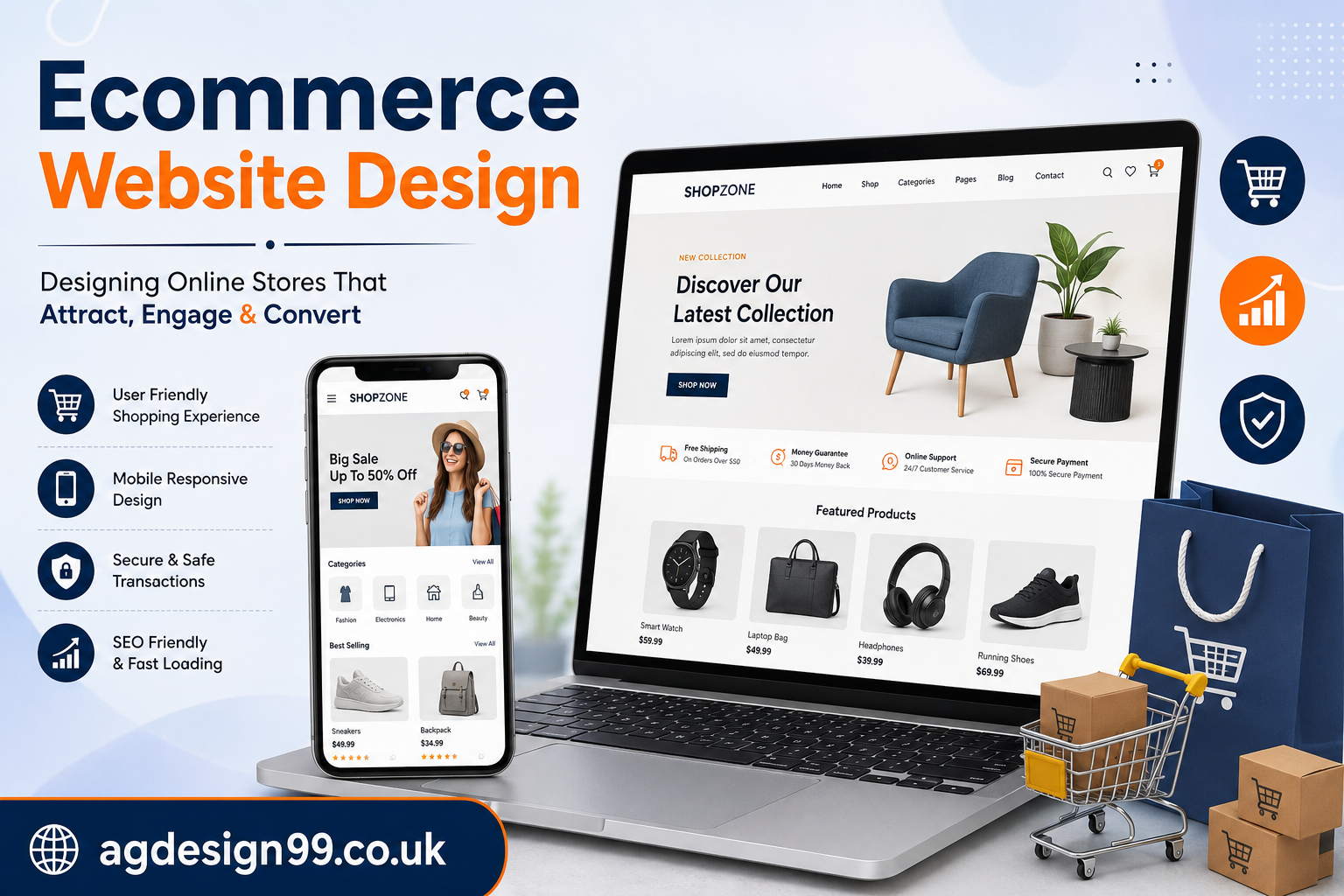
Ecommerce Website Design is one of the most important parts of running a successful online business. It is more than choosing beautiful colors or adding attractive pictures. What it means is creating a website that helps visitors find products easily, trust your business, and complete purchases without confusion. A well-designed online store creates a smooth shopping experience from the first click to the final payment. When customers enjoy using your website, they are more likely to stay longer, buy more products, and return in the future. Good design also makes your brand look professional, which increases customer confidence and improves your business reputation.
Understanding What Ecommerce Website Design Really Means
Many people believe website design is only about appearance, but there is much more to it. What it means is combining visual design, user experience, navigation, speed, mobile responsiveness, and functionality into one complete package. Every page should guide visitors naturally toward making a purchase. The layout should reduce confusion while making important information easy to find. A successful Ecommerce Website Design balances beauty with performance so customers enjoy browsing and shopping without facing unnecessary obstacles.
The Importance of First Impressions
Visitors often decide within a few seconds whether they want to stay on a website or leave. This makes first impressions extremely valuable. A clean homepage, professional branding, attractive product images, and organized navigation immediately build trust. On the other hand, a cluttered website with poor design can drive customers away before they even look at your products. Ecommerce Website Design should always focus on creating a welcoming experience that encourages visitors to continue exploring your online store.
Choosing the Right Layout for Better Shopping
The layout of an ecommerce website affects how easily customers browse products and find information. A simple layout with clearly organized categories makes shopping enjoyable and stress-free. What it means is placing important sections where users naturally expect them. Navigation menus should remain easy to understand, while product pages should highlight images, descriptions, prices, and purchase buttons. A thoughtful layout reduces frustration and increases the chances of converting visitors into paying customers.
Easy Navigation Creates Happy Customers
Navigation is one of the most important parts of Ecommerce Website Design because customers want quick access to products. Menus should contain clear category names, while search functions should deliver accurate results. Filters allow shoppers to narrow products by size, color, price, or brand. Easy navigation saves time and improves customer satisfaction. When visitors quickly locate what they need, they are much more likely to complete their purchases instead of leaving the website.
Mobile Friendly Design Matters More Than Ever
Millions of people shop using smartphones every day. Because of this, Ecommerce Website Design must work perfectly on every screen size. A mobile-friendly website automatically adjusts images, text, buttons, and menus for smaller displays. What it means is providing the same excellent shopping experience whether customers use a phone, tablet, or desktop computer. Mobile optimization not only improves customer satisfaction but also helps websites perform better in search engine rankings.
Fast Loading Speed Improves Every Visit
Website speed has a direct impact on customer behavior. Slow websites frustrate users and increase bounce rates. Ecommerce Website Design should include optimized images, efficient coding, and reliable hosting to improve loading speed. Every second matters because customers expect instant access to products and information. A faster website creates smoother browsing, better engagement, and higher conversion rates while improving the overall shopping experience.
High Quality Product Images Increase Trust
Customers cannot physically examine products when shopping online, so images become extremely important. Clear, high-resolution photographs help buyers understand product details and make confident decisions. Multiple viewing angles and zoom features provide even more information. What it means is reducing uncertainty and building customer trust. Ecommerce Website Design should always prioritize professional product photography because quality images often influence purchasing decisions more than long descriptions.
Product Descriptions Help Customers Make Better Decisions
A good product description explains features, benefits, materials, sizes, and usage in simple language. Instead of only listing specifications, descriptions should answer common customer questions and solve problems. Ecommerce Website Design works best when product pages combine informative text with attractive visuals. Helpful descriptions reduce confusion, lower return rates, and increase customer confidence during the buying process.
Colors Influence Customer Emotions
Colors play a powerful role in shaping customer opinions and purchasing behavior. Different colors create different emotions, making them an essential part of Ecommerce Website Design. Bright colors attract attention to important buttons, while softer backgrounds improve readability. Brand colors should remain consistent throughout the website to strengthen recognition and build trust. Choosing the right color combination creates a professional appearance while making shopping more enjoyable.
Typography Improves Readability
Fonts may seem like a small detail, but they strongly affect user experience. Clear and readable typography allows visitors to understand product information quickly. What it means is selecting fonts that remain easy to read on both desktop and mobile devices. Proper spacing, font size, and contrast make every page comfortable to read. Good typography supports a cleaner design while helping customers stay focused on your products.
Building Customer Trust Through Design
Trust is essential for every online store. Ecommerce Website Design should include visible contact information, customer reviews, secure payment icons, return policies, and professional branding. These elements reassure shoppers that the business is genuine and reliable. Trust-building design reduces hesitation during checkout and encourages first-time visitors to become repeat customers.
Creating an Effective Shopping Cart Experience
The shopping cart should remain simple and transparent. Customers need to review products, update quantities, remove items, and clearly see shipping costs before completing payment. Unexpected charges often cause abandoned carts. Ecommerce Website Design should provide an easy checkout process with minimal distractions. A smooth shopping cart experience reduces frustration and increases completed purchases.
Simple Checkout Leads to More Sales
Complicated checkout processes often discourage customers from finishing their orders. The best Ecommerce Website Design keeps checkout short, secure, and easy to follow. Customers should enter only necessary information while enjoying multiple payment options. Progress indicators also help shoppers understand where they are during checkout. Simplifying this process significantly improves conversion rates and customer satisfaction.
Search Engine Optimization Supports Long Term Growth
An attractive website alone cannot guarantee success if customers cannot find it online. Ecommerce Website Design should support search engine optimization by using clean code, fast loading speed, optimized images, structured content, and relevant keywords. What it means is making your website easier for search engines to understand while helping potential customers discover your products through organic search results.
Customer Reviews Build Confidence
People often trust other buyers before making purchasing decisions. Customer reviews provide valuable social proof that increases confidence. Ecommerce Website Design should display reviews clearly on product pages while encouraging customers to share honest feedback after purchasing. Positive reviews strengthen credibility, answer buyer questions, and improve overall conversion rates.
Security Protects Customers and Businesses
Online shoppers expect their personal and payment information to remain safe. Ecommerce Website Design must include secure payment gateways, encrypted connections, strong passwords, and regular security updates. What it means is protecting both customer data and business reputation. A secure website creates confidence, encourages purchases, and reduces the risk of cyber threats.
Personalization Improves Customer Experience
Modern ecommerce websites often recommend products based on customer interests and previous purchases. Personalized shopping experiences help visitors discover products they genuinely need. Ecommerce Website Design can include recently viewed items, recommended products, personalized offers, and wish lists. These features make shopping more convenient while increasing customer satisfaction and sales.
Keeping the Website Updated
An ecommerce website should never remain unchanged for long periods. Products, promotions, images, and content require regular updates to keep the website fresh and relevant. Outdated information can confuse customers and reduce trust. Ecommerce Website Design should evolve with changing customer expectations, market trends, and new technology. Regular improvements keep the shopping experience modern and competitive.
Future Trends in Ecommerce Website Design
Technology continues to transform online shopping. Artificial intelligence, voice search, virtual product previews, faster checkout methods, and personalized experiences are becoming more common. Ecommerce Website Design will continue focusing on speed, simplicity, accessibility, and customer satisfaction. Businesses that adapt to these changes will remain competitive while delivering better shopping experiences for future customers.
Why Ecommerce Website Design Is Worth the Investment
Investing in professional Ecommerce Website Design benefits businesses of every size. A well-designed online store attracts more visitors, builds trust, improves customer experience, and increases sales over time. What it means is creating a website that works for your business around the clock by serving customers efficiently and professionally. Rather than viewing design as an expense, successful businesses see it as an investment that supports long-term growth and strengthens their brand.
Conclusion
Ecommerce Website Design is much more than creating an attractive online store. It combines usability, speed, security, visual appeal, and customer-focused features to deliver an enjoyable shopping experience. Every design decision influences how visitors interact with your website and whether they become loyal customers. By focusing on clear navigation, mobile responsiveness, fast performance, trustworthy design, and valuable content, businesses can create online stores that attract more traffic, increase conversions, and support long-term success. A thoughtful Ecommerce Website Design not only improves customer satisfaction but also builds a strong foundation for sustainable business growth.
FAQs
What is Ecommerce Website Design?
Ecommerce Website Design is the process of creating an online store that is attractive, easy to use, and designed to help customers shop smoothly.
Why is Ecommerce Website Design important?
It improves user experience, builds trust, increases sales, and helps customers find products quickly.
How does mobile design affect ecommerce websites?
A mobile-friendly design allows customers to browse and buy products comfortably on smartphones and tablets.
Can Ecommerce Website Design improve SEO?
Yes. Fast loading speed, responsive design, clean structure, and optimized content help improve search engine rankings.
How often should an ecommerce website be updated?
It is best to update products, content, security features, and design regularly to keep the website modern, secure, and competitive.