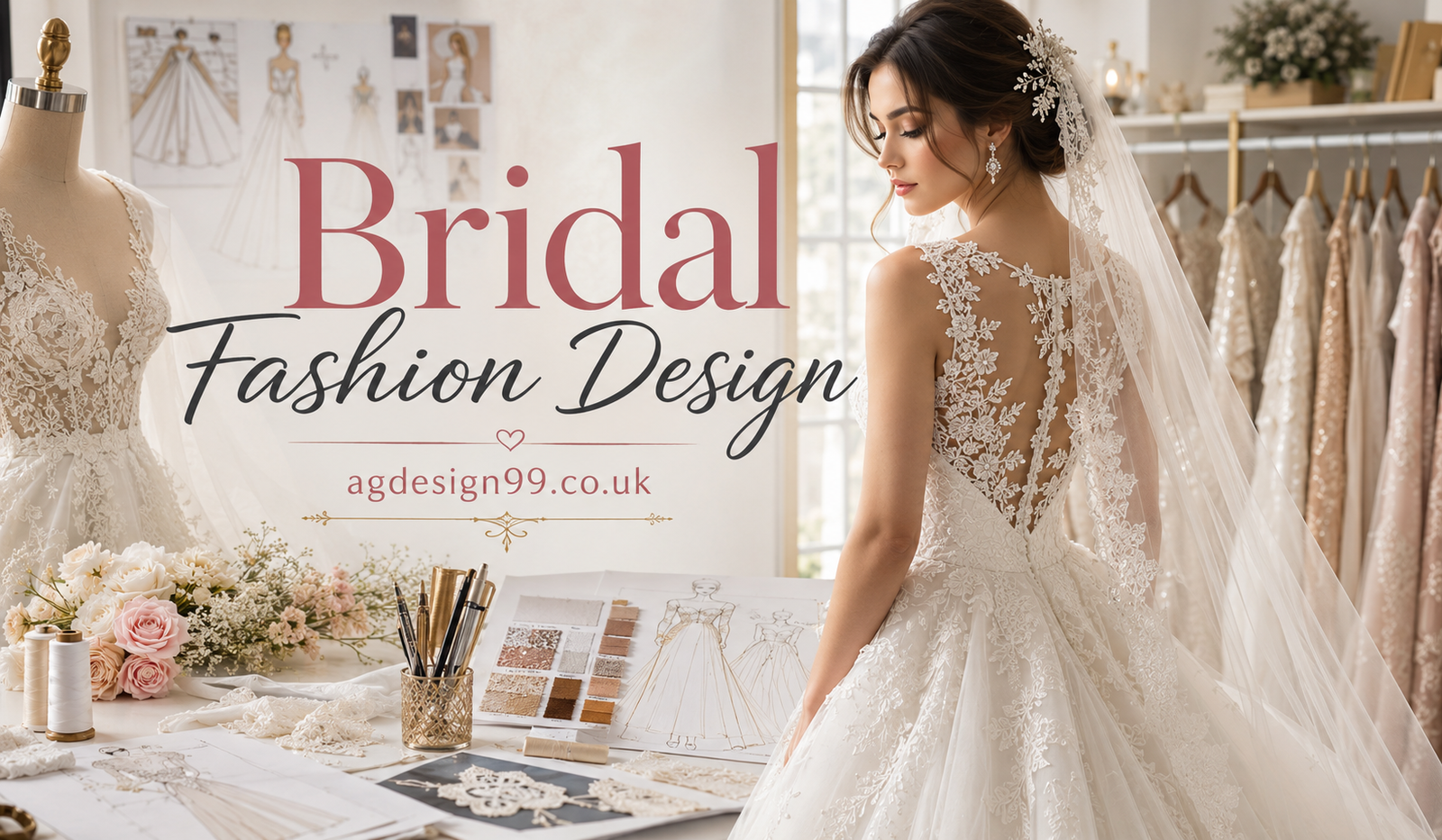
Bridal fashion design is the specialized process of creating clothing specifically for weddings. Unlike everyday fashion, bridal wear focuses on celebrating one of life’s most meaningful occasions.
Designers carefully balance several important elements, including:
- Beauty
- Comfort
- Body shape
- Cultural traditions
- Personal preferences
- Seasonal suitability
- Photography appeal
Every bridal gown represents months of planning, design revisions, fittings, and detailed craftsmanship.
Why Bridal Fashion Design Is Unique
Designing wedding dresses requires a completely different mindset compared to designing casual clothing.
Bridal gowns often include:
- Intricate lace
- Hand embroidery
- Beading
- Premium fabrics
- Multiple layers
- Structured corsetry
- Long trains
- Veils
- Luxury finishing techniques
Every detail matters because wedding photographs preserve these memories forever.
The Evolution of Bridal Fashion Design
Wedding fashion has transformed dramatically over the centuries.
Traditional Eras
Brides often wore colorful ceremonial garments that reflected local customs rather than white dresses.
The White Wedding Era
White wedding gowns became increasingly popular during the nineteenth century and gradually became a global bridal tradition.
Modern Bridal Fashion
Today’s bridal fashion celebrates individuality.
Brides now choose:
- Minimalist dresses
- Vintage-inspired gowns
- Glamorous couture
- Sustainable designs
- Colored wedding dresses
- Convertible gowns
- Modern jumpsuits
There are virtually no limits.
Understanding the Bridal Design Process
Professional bridal fashion design follows several creative stages.
Client Consultation
Everything starts with understanding the bride.
Designers discuss:
- Wedding venue
- Theme
- Budget
- Preferred silhouettes
- Favorite fabrics
- Cultural traditions
- Comfort requirements
Listening carefully often matters more than drawing.
Mood Board Creation
A mood board helps organize inspiration.
It may include:
- Colors
- Fabric swatches
- Lace samples
- Floral ideas
- Jewelry inspiration
- Hairstyles
- Architectural elements
- Nature photography
This becomes the visual direction for the gown.
Sketching the Dress
The first sketches translate ideas into wearable fashion.
Professional sketches explore:
- Necklines
- Sleeves
- Waistlines
- Trains
- Veils
- Embellishments
Several versions are usually created before choosing the final concept.
Fabric Selection
Fabric defines how a gown moves, shines, and feels.
Popular bridal fabrics include:
Satin
Smooth, luxurious, and timeless.
Perfect for elegant weddings.
Silk
Lightweight with beautiful natural shine.
Often considered the most luxurious option.
Tulle
Creates volume while remaining light.
Ideal for princess-style gowns.
Organza
Provides structure without excessive weight.
Lace
Adds romance and timeless elegance.
Available in countless patterns and textures.
Chiffon
Soft, flowing, and ideal for beach weddings.
Choosing the Perfect Bridal Silhouette
One of the biggest decisions in bridal fashion design is selecting the silhouette.
Ball Gown
The classic fairy-tale wedding dress.
Features:
- Full skirt
- Defined waist
- Dramatic appearance
Suitable for formal weddings.
A-Line Dress
A universally flattering silhouette.
It gently flows from the waist without overwhelming the body.
Mermaid Gown
Fits closely through the hips before flaring dramatically.
Perfect for brides wanting a glamorous appearance.
Trumpet Dress
Similar to a mermaid gown but flares higher above the knee.
Offers easier movement.
Sheath Dress
Simple, elegant, and modern.
Ideal for destination weddings and minimalist brides.
Popular Neckline Options
Necklines shape the personality of a bridal gown.
Popular choices include:
- Sweetheart
- V-neck
- Boat neck
- Halter
- Off-the-shoulder
- Square neckline
- High neck
- Illusion neckline
Each creates a completely different visual effect.
Sleeve Styles That Transform a Dress
Sleeves have become one of the strongest bridal fashion trends.
Designers now create gowns featuring:
- Long lace sleeves
- Puff sleeves
- Cap sleeves
- Bishop sleeves
- Off-shoulder sleeves
- Detachable sleeves
These options allow brides to personalize their look.
Embellishments That Add Luxury
Luxury bridal fashion relies on detailed embellishments.
Common decorative elements include:
- Pearls
- Sequins
- Swarovski crystals
- Hand embroidery
- Floral appliqués
- Beadwork
- Metallic thread
- 3D flowers
The key is balance.
Too many embellishments can distract from the overall design.
Color Trends Beyond White
Although white remains popular, many brides now embrace subtle color variations.
Popular shades include:
- Ivory
- Champagne
- Blush pink
- Soft gold
- Nude
- Pearl
- Light silver
These shades photograph beautifully while adding personality.
Bridal Fashion Design Around the World
Wedding fashion reflects culture, history, and tradition.
South Asian Bridal Fashion
Rich embroidery, luxurious fabrics, vibrant colors, and handcrafted embellishments define these breathtaking designs.
Middle Eastern Bridal Style
Elegant silhouettes paired with intricate beadwork create dramatic gowns.
Western Bridal Fashion
Often emphasizes structured silhouettes, flowing trains, and delicate lace.
East Asian Wedding Wear
Many designers blend traditional garments with contemporary bridal fashion.
Global inspiration continues to shape modern bridal collections.
Sustainable Bridal Fashion Design
Environmental awareness has transformed bridal fashion.
Many designers now focus on:
- Organic fabrics
- Ethical production
- Recycled lace
- Local craftsmanship
- Handmade details
- Rental bridal gowns
- Convertible dresses
Sustainable bridal fashion proves luxury and responsibility can coexist.
Technology Is Changing Bridal Fashion
Digital innovation has transformed bridal design.
Modern designers use:
- 3D design software
- Digital sketching
- Virtual fittings
- Laser cutting
- Precision embroidery machines
- Artificial intelligence for design visualization
Technology improves efficiency while preserving artistic creativity.
Common Mistakes Brides Should Avoid
Many brides focus only on appearance.
Instead, consider:
- Comfort during long ceremonies
- Venue suitability
- Seasonal weather
- Mobility
- Fabric weight
- Proper tailoring
- Sitting comfortably
- Dancing with ease
A beautiful dress should also feel wonderful to wear.
Bridal Accessories Complete the Look
A gown becomes even more memorable with carefully selected accessories.
Popular options include:
- Veils
- Gloves
- Statement earrings
- Hair vines
- Tiaras
- Bridal belts
- Shoes
- Elegant handbags
Accessories should complement—not overpower—the dress.
Tips for Aspiring Bridal Fashion Designers
Success in bridal fashion comes from combining creativity with technical skill.
Focus on:
Learn Pattern Making
A beautiful sketch means little without proper construction.
Study Fabrics
Different fabrics behave differently when sewn.
Practice Draping
Draping helps designers understand movement and proportion.
Master Fit
Perfect tailoring separates luxury gowns from average ones.
Build a Strong Portfolio
Include sketches, finished garments, mood boards, and construction details.
Stay Inspired
Visit exhibitions, study historical fashion, observe architecture, and explore nature for fresh ideas.
Current Bridal Fashion Design Trends
Modern bridal collections embrace individuality.
Popular trends include:
- Minimalist elegance
- Detachable overskirts
- Sculptural sleeves
- Square necklines
- Pearl embellishments
- Clean satin gowns
- Statement bows
- Floral embroidery
- Sheer details
- Soft romantic silhouettes
Rather than following trends blindly, brides increasingly choose styles that reflect their personalities.
How to Choose the Right Bridal Designer
Finding the right designer is just as important as choosing the dress itself.
Look for someone who:
- Understands your vision
- Communicates clearly
- Has a strong portfolio
- Provides realistic timelines
- Respects your budget
- Offers multiple fittings
- Pays attention to detail
Trust and communication make the design journey enjoyable.
Bridal Fashion Design for Different Wedding Venues
The venue often influences the best dress style.
Beach Weddings
Choose lightweight fabrics like chiffon or soft tulle.
Garden Weddings
Floral lace and flowing silhouettes complement outdoor settings beautifully.
Ballroom Weddings
Grand ball gowns with dramatic trains create a luxurious presence.
Destination Weddings
Wrinkle-resistant fabrics and simple silhouettes make travel easier.
Winter Weddings
Long sleeves, heavier fabrics, and elegant capes add warmth and sophistication.
The Importance of Proper Fittings
Even the most beautiful gown requires careful fitting.
Most custom bridal dresses involve multiple appointments to refine every detail. Adjustments to the bodice, hemline, sleeves, and train ensure the dress fits perfectly and allows the bride to move comfortably throughout the celebration.
Professional tailoring can transform a lovely dress into an exceptional one.
The Future of Bridal Fashion Design
Bridal fashion continues to evolve while honoring timeless elegance.
Future collections are expected to feature:
- Sustainable luxury materials
- Smart textiles
- Custom digital design experiences
- More inclusive sizing
- Gender-neutral wedding fashion
- Personalized embroidery
- Convertible designs
- Lightweight couture techniques
Despite technological advances, handcrafted details and emotional storytelling will always remain at the heart of bridal fashion.
Conclusion
Bridal Fashion Design is where creativity, craftsmanship, and personal expression come together. A thoughtfully designed wedding gown is more than a beautiful garment—it reflects the bride’s personality, celebrates tradition, and creates memories that last a lifetime.
Whether inspired by classic elegance, modern minimalism, or cultural heritage, the best bridal designs balance style with comfort and individuality. As fashion continues to evolve, brides have more opportunities than ever to create a look that feels authentic and unforgettable. Investing in quality design, expert tailoring, and meaningful details ensures a gown that looks stunning on the wedding day and remains cherished for years to come.
Frequently Asked Questions
1. What is bridal fashion design?
Bridal fashion design is the art of creating wedding dresses and bridal accessories that combine aesthetics, comfort, craftsmanship, and personal style for wedding ceremonies.
2. Which fabric is best for a wedding dress?
Popular choices include silk, satin, lace, chiffon, organza, and tulle. The ideal fabric depends on the wedding season, venue, and desired silhouette.
3. How long does it take to design a custom bridal gown?
A custom bridal gown typically takes between three and eight months, depending on the complexity of the design and the number of fittings required.
4. What is the most flattering wedding dress silhouette?
The A-line silhouette is widely considered one of the most universally flattering because it suits a variety of body shapes while offering comfort and elegance.
5. Are sustainable wedding dresses becoming more popular?
Yes. Many designers now use eco-friendly fabrics, ethical production methods, and reusable or convertible designs to meet growing demand for sustainable bridal fashion.
Read also: Joel Osteen House Inside Houston’s Famous River Oaks Mansion