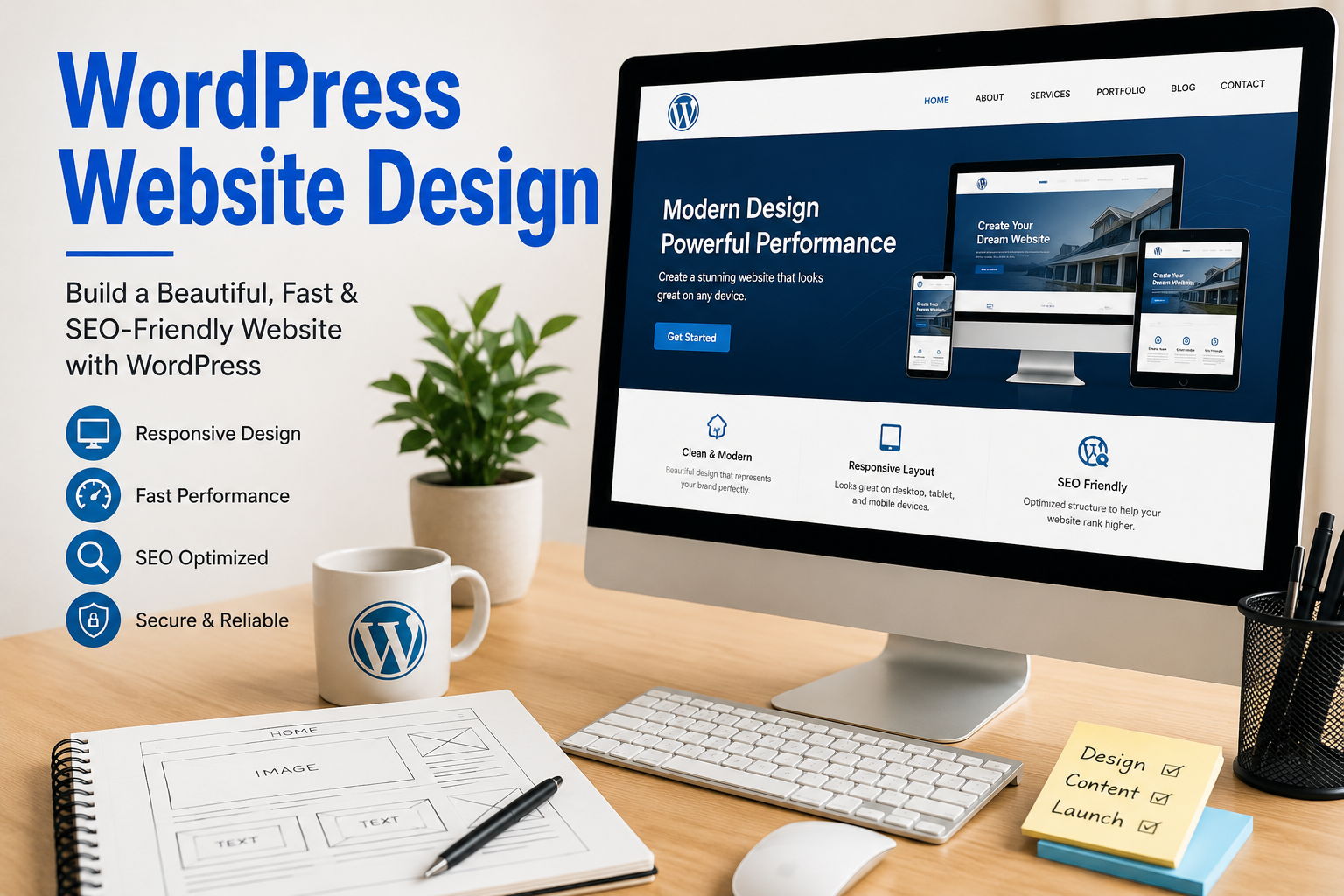
WordPress website design is a great choice if you want a professional website without making things complicated. Whether you’re starting a blog, launching a business, or opening an online store, WordPress gives you the freedom to create a site that looks polished and works smoothly. A good design isn’t just about appearance—it helps visitors feel confident, find what they need quickly, and keeps your website ready to grow over time.
What Is WordPress Website Design?
WordPress website design is the process of planning, creating, and customizing a website using the WordPress content management system. It combines visual design, content organization, responsive layouts, typography, colors, images, and technical optimization to deliver a seamless experience across devices. Instead of simply choosing a theme and publishing pages, successful WordPress design focuses on making the website useful, accessible, and easy to navigate while reflecting the personality of the brand or individual behind it.
Why WordPress Is the Most Popular Website Platform
Millions of websites use WordPress because it offers an excellent balance between simplicity and flexibility. Beginners appreciate its user-friendly dashboard, while experienced developers enjoy the ability to customize nearly every aspect of a website. The large ecosystem of themes, plugins, and community support makes it suitable for blogs, company websites, online stores, educational platforms, and membership sites, allowing businesses to grow without switching to another platform later.
The Importance of Good Website Design
A well-designed website creates a positive first impression within seconds. Visitors naturally judge a website based on its appearance, loading speed, and ease of navigation. If pages are confusing or outdated, users often leave before exploring the content. On the other hand, clean layouts, readable fonts, consistent branding, and logical page structures encourage visitors to stay longer, increasing engagement and the likelihood of conversions.
Choosing the Right WordPress Theme
Selecting the right theme lays the foundation for your entire website. A quality WordPress theme should be lightweight, mobile responsive, SEO-friendly, regularly updated, and compatible with popular plugins. Rather than choosing a theme with countless unnecessary features, it is usually better to select one that focuses on performance, clean code, and flexibility so your website remains fast and easy to manage.
Planning Your Website Before Designing
Before opening the WordPress dashboard, it helps to define your website’s purpose, target audience, and desired outcomes. Planning the site structure, page hierarchy, navigation menu, and content categories creates a smoother design process while reducing future changes. This strategic approach also improves the user journey by making important information easy to discover.
Creating a User-Friendly Navigation
Navigation acts as the roadmap for every visitor. Menus should remain simple, descriptive, and organized so users can quickly reach the information they need. Clear navigation reduces frustration, improves accessibility, and encourages visitors to explore multiple pages instead of leaving after viewing only one.
Mobile-Responsive WordPress Website Design
Most website visitors now browse on smartphones and tablets, making responsive design essential rather than optional. A responsive WordPress website automatically adjusts layouts, images, and text for different screen sizes, ensuring users enjoy the same quality experience regardless of the device they use. This also supports stronger search engine performance since mobile usability is an important ranking factor.
Designing an SEO-Friendly Website Structure
Search engines understand websites more effectively when pages are logically organized. Using descriptive URLs, proper heading hierarchy, internal linking, optimized images, and relevant keywords naturally throughout the content helps both users and search engines navigate your website. Good structure improves crawling, indexing, and overall visibility in search results.
Improving Website Speed
Website speed directly affects user satisfaction and SEO performance. Slow-loading pages often lead to higher bounce rates and lower conversions. Compressing images, using lightweight themes, minimizing unnecessary plugins, enabling caching, and choosing reliable hosting all contribute to faster loading times and a smoother browsing experience.
The Role of Colors and Typography
Colors influence emotions while typography affects readability. Choosing a consistent color palette strengthens brand recognition, and selecting clean, easy-to-read fonts improves the reading experience across all devices. When these design elements work together, the website feels polished, professional, and welcoming.
Creating High-Quality Visual Content
Images, illustrations, icons, and videos make websites more engaging when used thoughtfully. Instead of filling pages with decorative graphics, every visual should support the message, explain a concept, or enhance the user experience. Optimized image sizes also help maintain fast loading speeds without sacrificing quality.
Using Plugins Wisely
Plugins extend the functionality of WordPress, but installing too many can slow down a website and create compatibility issues. Choosing trusted, regularly updated plugins that solve specific problems helps maintain security, performance, and stability while keeping website management simple.
Website Security Matters
A secure WordPress website protects both business owners and visitors from common online threats. Strong passwords, regular software updates, security plugins, SSL certificates, automatic backups, and careful user permission management significantly reduce the risk of hacking, malware, and data loss.
Designing for Better User Experience
User experience goes beyond appearance because it focuses on how people interact with the website. Clear calls to action, consistent layouts, readable content, accessible navigation, and intuitive page design help visitors complete tasks with minimal effort, making them more likely to return in the future.
Optimizing WordPress Website Design for Local Businesses
Local businesses benefit from adding location-specific information, service pages, customer reviews, contact forms, and maps that make it easier for nearby customers to connect. Combining these features with local SEO practices increases visibility in regional search results and builds trust with potential clients.
Common WordPress Website Design Mistakes
Many websites struggle because they include cluttered layouts, inconsistent branding, excessive animations, poor navigation, outdated plugins, or large unoptimized images. Avoiding these common mistakes creates a cleaner experience, improves loading speed, and makes the website more enjoyable for visitors.
Future Trends in WordPress Website Design
WordPress design continues to evolve with block-based editing, AI-assisted workflows, faster performance optimization, accessibility improvements, dark mode options, and interactive user experiences becoming more common. While trends change over time, the core principles of speed, usability, and valuable content remain essential for long-term success.
Why Professional WordPress Website Design Is Worth the Investment
Although anyone can build a website using WordPress, investing time in thoughtful design or working with experienced professionals often produces better long-term results. A professionally designed website reflects credibility, supports business growth, improves user trust, and creates an experience that encourages visitors to become loyal customers.
Conclusion
WordPress website design is about much more than choosing an attractive theme. It combines strategy, creativity, technical optimization, and user experience to create websites that perform well in search engines while delivering real value to visitors. By focusing on responsive layouts, fast performance, quality content, strong security, and intuitive navigation, you build a website that not only looks professional but also supports sustainable growth for years to come.
Frequently Asked Questions
What is WordPress website design?
WordPress website design is the process of creating and customizing websites using WordPress to provide an attractive, functional, and user-friendly online experience.
Is WordPress good for business websites?
Yes. WordPress is suitable for businesses of all sizes because it offers flexibility, scalability, SEO-friendly features, and thousands of customization options.
Does WordPress website design help with SEO?
Yes. A well-designed WordPress website with proper structure, fast loading speed, mobile responsiveness, and optimized content can significantly improve search engine visibility.
Can beginners design a WordPress website?
Absolutely. WordPress is beginner-friendly, and many themes and page builders allow users to create professional websites without coding experience.
How important is mobile responsiveness in WordPress?
Mobile responsiveness is essential because most visitors browse on mobile devices, and search engines prioritize mobile-friendly websites in rankings.
Read also: Luxury Office Interior Design Guide for Elegant and Productive Offices