
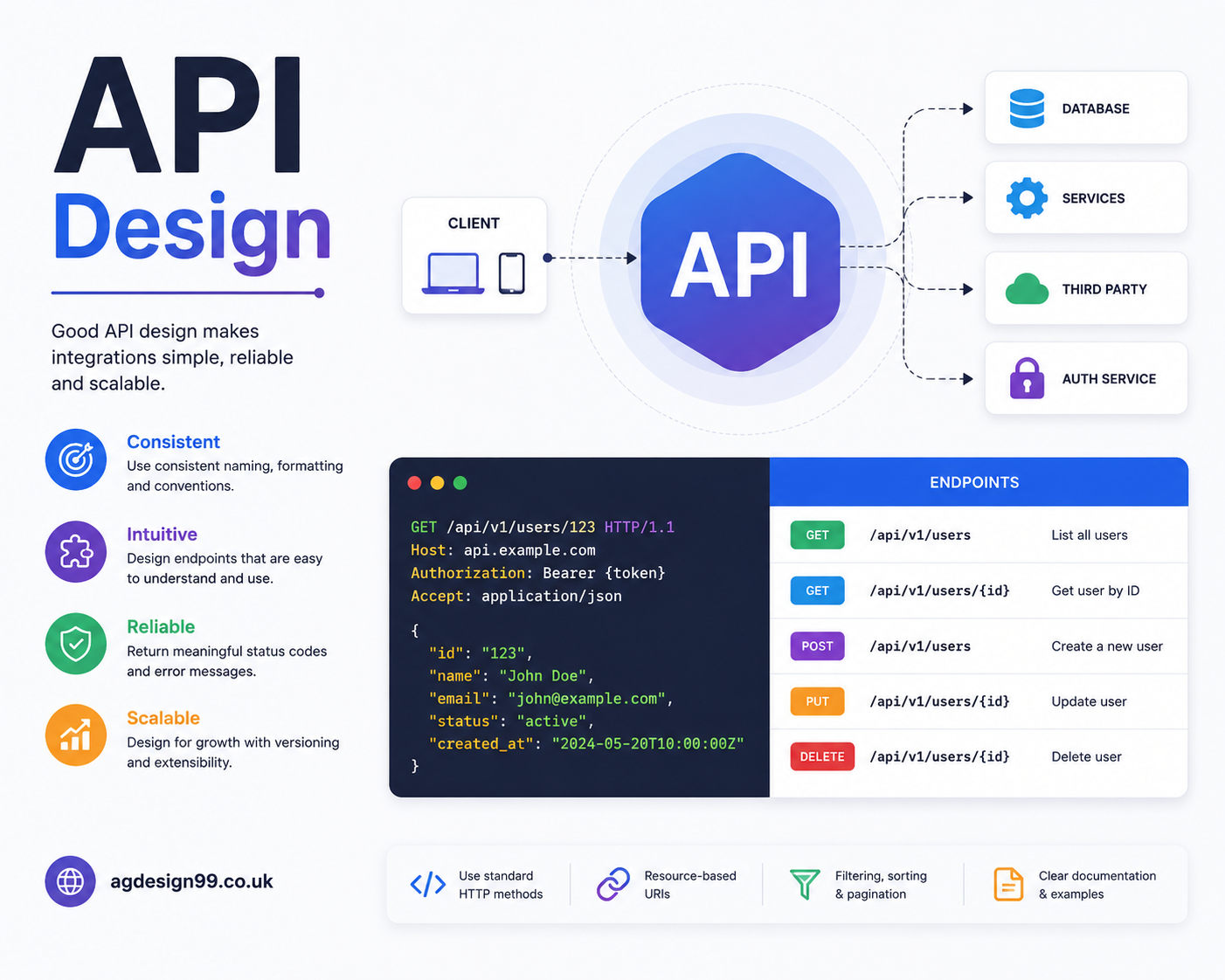
API Design Modern software often feels smooth on the surface, but behind the scenes, systems struggle to talk to each other. Apps break, data gets lost, and developers spend hours fixing communication issues instead of building new features. This is where api design becomes important. What it means is simple: it defines how different software systems exchange information in a clear and predictable way. Without strong design, even powerful systems become messy and unreliable. Today, almost every digital product depends on APIs, from mobile apps to banking platforms, and poor design can slow everything down. So when we talk about api design, we are really talking about making digital communication clean, stable, and easy to understand.
What API Design Really Means in Simple Words
API design is the process of deciding how software systems should talk to each other. It sets the rules for requests, responses, and behavior so everything stays consistent. What it means in simple language is this: one system asks for something, another system responds in a structured way. Good api design makes this exchange feel natural and predictable. Developers do not have to guess how things work because the structure guides them clearly. It focuses on clarity, simplicity, and long-term usability so systems remain easy to maintain even as they grow.
Origin and Background of API Design Evolution
The idea of api design did not appear suddenly. It grew with the rise of networked computing and the internet. In the early days, systems were tightly connected, meaning everything had to be built together. As software expanded, developers needed a way for separate systems to communicate without rewriting everything. This led to APIs, and over time, structured api design principles developed. As web applications, mobile apps, and cloud systems evolved, the need for clean and scalable communication became critical. Today, api design is a core part of software engineering across all industries.
Why API Design Matters in Modern Systems
Without good api design, systems become confusing and fragile. Developers waste time fixing broken connections instead of building features. Users experience delays, errors, and inconsistent behavior. The real problem is not just technical failure but also lack of structure. Good api design solves this by creating predictable communication rules. It helps teams work faster, reduces bugs, and improves scalability. What this means is simple: when design is strong, everything else becomes easier. When design is weak, every small change becomes risky.
Core Principles That Guide API Design
Strong api design follows a few key principles that keep systems stable and easy to use. First, consistency matters because users should not learn new rules for every endpoint. Second, simplicity ensures developers can understand the system quickly. Third, predictability allows responses to behave in expected ways. Finally, scalability ensures the system can grow without breaking existing features. These principles work together to create a smooth developer experience. When applied correctly, api design becomes a foundation rather than a challenge.

Core Components of API Design Explained Clearly
Every api design includes important components such as endpoints, methods, requests, responses, and data models. Endpoints define where data is accessed, while methods like GET or POST define actions. Requests carry input data, and responses return results in a structured format. Data models define how information is organized. What this means is that every part plays a role in communication. When these components are well designed, systems can interact without confusion or mismatch.
Data Structure and Format in API Design
Data structure is one of the most important parts of api design. Most modern APIs use formats like JSON because it is simple, readable, and flexible. A good design ensures that data is not just sent but also organized in a meaningful way. This makes it easier for developers to use the data without extra processing. Clear structure reduces errors and improves performance. When systems exchange clean data, everything from apps to servers becomes more efficient and reliable.
Step by Step Understanding of How API Design Works
To understand api design, think of a simple step by step flow. First, a user or system sends a request to an API. Then the API checks the request, processes it, and communicates with the database or service. After that, it builds a response and sends it back. Finally, the receiving system uses that data. This flow happens in milliseconds, but each step depends on careful design. If any step is unclear, the entire system becomes unstable or slow.
REST Style Approach in API Design
One of the most common approaches in api design is REST. It organizes APIs around resources like users, products, or orders. Each resource has standard actions like create, read, update, and delete. This makes APIs easier to understand because they follow predictable patterns. REST also uses standard web methods, which makes integration simple. The strength of this approach is its clarity and scalability, which is why it is widely used in modern applications.
Authentication and Security in API Design
Security is a major part of api design because APIs often handle sensitive data. Authentication ensures that only authorized users can access the system. This is usually done through tokens or keys. Authorization then decides what each user is allowed to do. What this means is simple: even if someone reaches the system, they cannot misuse it without permission. Strong security design protects both users and businesses from data breaches and misuse.
Error Handling and Response Design
Errors are unavoidable in any system, so api design must handle them properly. Instead of showing confusing messages, APIs should return clear and structured error responses. This helps developers understand what went wrong and how to fix it. For example, missing data, invalid input, or unauthorized access should all have specific error codes. Good error handling improves debugging and creates a smoother developer experience.
Versioning and Long Term Stability in API Design
As systems grow, APIs change. Versioning helps manage these changes without breaking existing applications. For example, a system might move from version one to version two while still supporting both. This allows developers to upgrade gradually. What it means is simple: users are not forced into sudden changes. Good api design always considers future growth and avoids breaking older systems.
Pagination Filtering and Data Control Techniques
Large datasets can slow down systems if not handled properly. That is why api design uses techniques like pagination, filtering, and sorting. Pagination breaks data into smaller chunks. Filtering lets users request specific data. Sorting organizes results in a meaningful order. These techniques improve performance and make data easier to use. Without them, systems would become slow and difficult to manage.
Real World Example of API Design in E Commerce
In an e commerce system, api design controls everything from browsing products to placing orders. When a user searches for a product, the API fetches matching items. When they add items to a cart, another API handles updates. Finally, checkout APIs process payments. This structure allows different parts of the system to work together smoothly. Without proper design, even simple shopping actions would become slow or unreliable.

Example of API Design in Social Media Platforms
Social media platforms depend heavily on api design. When you scroll a feed, APIs fetch posts from servers. When you like or comment, other APIs update the data instantly. Notifications also depend on APIs communicating across systems. This constant interaction requires a very stable design. Even small delays or errors can affect user experience, so every interaction must be carefully structured and optimized.
Benefits of Strong API Design
Good api design brings many benefits. It improves system performance, reduces bugs, and makes development faster. It also helps teams collaborate better because everyone follows the same structure. Another major benefit is scalability, allowing systems to grow without breaking. What this means is simple: strong design saves time, reduces stress, and improves long term stability for any software product.
Applications of API Design Across Industries
API design is used everywhere. In finance, it powers banking transactions and payment systems. In healthcare, it connects patient records and hospital systems. In travel, it manages bookings and schedules. In entertainment, it powers streaming platforms. Every modern digital industry depends on APIs to function. Without it, systems would remain isolated and inefficient.
Challenges and Limitations in API Design
Despite its importance, api design comes with challenges. One major issue is maintaining consistency as systems grow. Another challenge is balancing flexibility with security. Too much flexibility can lead to misuse, while too much restriction can limit functionality. Performance is also a concern when APIs handle large amounts of traffic. These challenges require careful planning and continuous improvement.
Future of API Design with AI and Technology
The future of api design is closely tied to artificial intelligence and automation. AI can help generate smarter APIs, detect issues early, and optimize performance automatically. Systems will become more adaptive, responding to user needs in real time. What this means is that api design will become more intelligent and less manual. As technology evolves, APIs will play an even bigger role in connecting complex digital ecosystems.
Conclusion
At its core, api design is about communication between systems. When done well, it creates smooth, reliable, and scalable software experiences. When done poorly, it creates confusion and failure. The real value lies in simplicity and structure. As digital systems continue to grow, strong api design will remain the foundation that keeps everything connected and working properly.
FAQs About API Design
What is api design?
It is the process of creating rules for how software systems communicate with each other in a structured and predictable way.
Why is api design important?
It ensures systems work smoothly together, reduces errors, and improves scalability and performance.
What is REST in api design?
REST is an approach that organizes APIs around resources and uses standard methods like GET and POST.
How does api design improve security?
It uses authentication and authorization to control who can access data and what actions they can perform.
Where is api design used?
It is used in almost every industry including finance, healthcare, social media, e commerce, and entertainment.