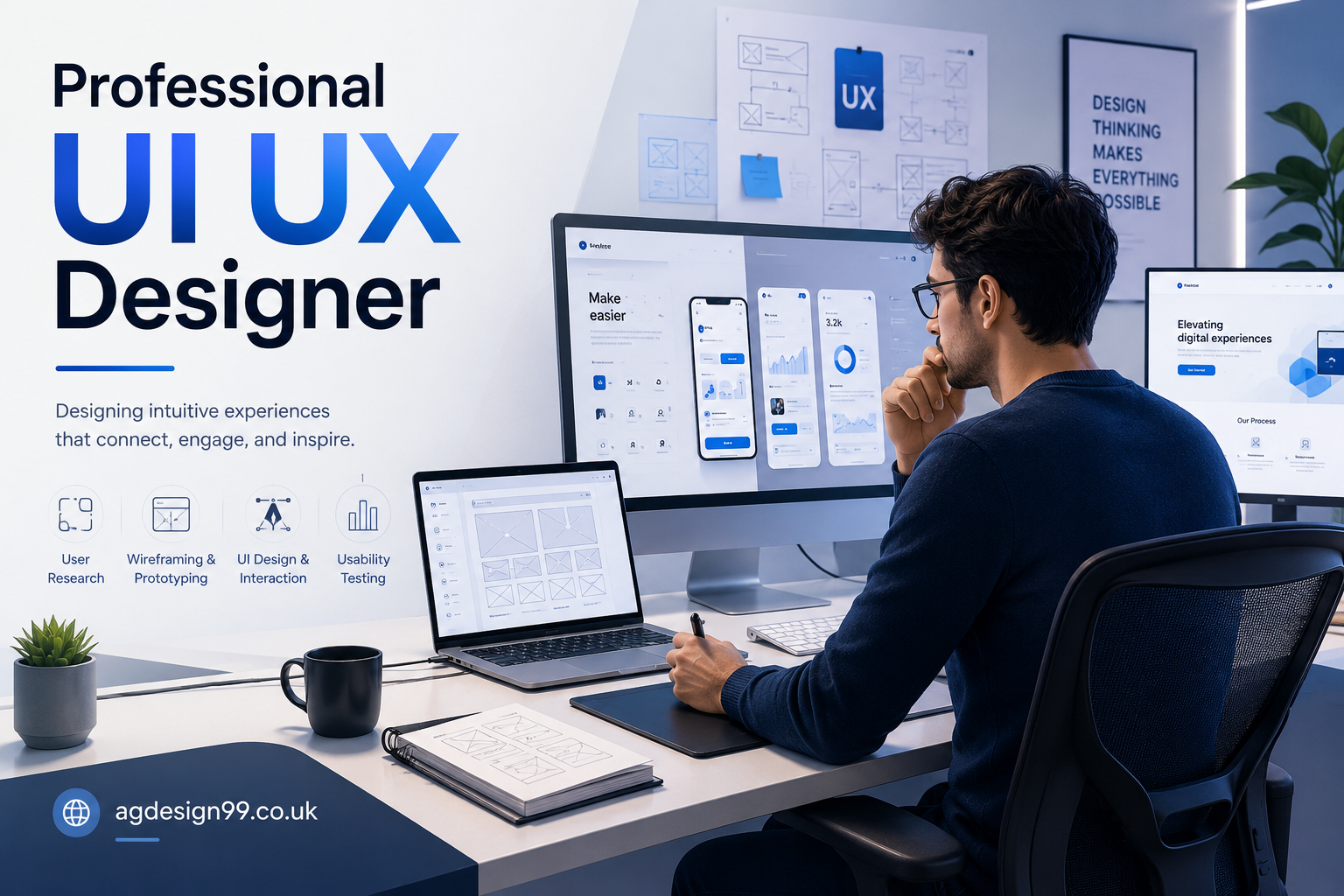
A professional UI UX designer is someone who designs digital experiences that are easy to use, visually clear, and enjoyable. UI stands for User Interface, which focuses on how things look, while UX stands for User Experience, which focuses on how things work. Together, they shape the complete journey of a user inside an app or website. What it means in simple terms is this: a UI UX designer makes sure that when you open an app, you instantly understand what to do without confusion. They think about buttons, colors, spacing, navigation, and overall flow. A professional UI UX designer does not guess what users want; they study real behavior and design based on facts. This makes their work both creative and logical at the same time. In today’s digital world, this role connects design thinking with human psychology in a very practical way.
Why UI UX Matters in Today’s Digital World
The importance of a professional UI UX designer has grown because users now expect speed, simplicity, and clarity in every digital product. People no longer tolerate confusing interfaces or slow interactions. If something feels hard to use, they quickly switch to a competitor. This makes UI UX design not just a creative skill but a business necessity. A well-designed product keeps users engaged longer and builds trust without needing extra explanation. On the other hand, poor design leads to frustration and loss of customers. Let’s break it down simply: good UI UX design reduces effort for the user and increases value for the business. That is why companies invest heavily in hiring a professional UI UX designer who can understand user needs and turn them into smooth digital experiences. This balance between user satisfaction and business goals is what makes this field so powerful today.
Origin and Background of UI UX Design
The concept of a professional UI UX designer did not exist in the early days of technology. In the beginning, software was built mainly for function, not comfort. Engineers focused on making systems work, not on how users interacted with them. Over time, as computers became more common, people realized that technology needed to be easier for everyday users. This shift created the foundation of UI and UX design. The idea gained more structure with the rise of personal computers and later smartphones, where user experience became a major factor in success. Companies like early software developers and later tech giants began hiring specialists to improve usability. Slowly, the role of a professional UI UX designer emerged as a separate discipline combining psychology, design, and technology. Today, it stands as a core part of product development across industries.
Core Responsibilities of a Professional UI UX Designer
A professional UI UX designer handles many responsibilities that go beyond simple visual design. They research users, understand problems, create design solutions, and test their ideas in real environments. One major responsibility is identifying user needs through observation and feedback. Another is translating those needs into wireframes and design layouts. They also collaborate with developers to ensure the final product works as intended. What this really means is that they act as a bridge between users and technology. They are responsible for making sure every button, screen, and interaction has a clear purpose. A professional UI UX designer also improves existing products by analyzing where users face problems and fixing those issues. Their role is continuous, meaning they keep improving designs even after the product is launched.
Core Skills Required for a Professional UI UX Designer
To become a strong professional UI UX designer, a combination of creative and analytical skills is needed. First, visual design skills help in creating attractive interfaces that are easy on the eyes. Second, problem-solving skills allow designers to understand user issues and find practical solutions. Third, communication skills are important because designers must explain their ideas clearly to teams and clients. Another important skill is empathy, which helps them understand user emotions and behavior. Technical knowledge of design tools also plays a big role in their daily work. What it means overall is that a professional UI UX designer must think like both a creative artist and a logical thinker. This balance is what makes their work effective and impactful in real-world projects.
Tools Used by a Professional UI UX Designer
A professional UI UX designer uses various digital tools to bring ideas to life. These tools help in sketching layouts, creating prototypes, and testing designs. Popular tools include interface design software, wireframing platforms, and user testing systems. Each tool serves a different purpose in the design process. For example, some tools help in drawing early ideas, while others help in building interactive prototypes that feel like real apps. What this means is that tools are not the focus but support systems that help designers think clearly and communicate better. A professional UI UX designer chooses tools based on project needs, not personal preference alone. This flexibility allows them to adapt to different industries and workflows easily.
Design Thinking Process in UI UX
The design thinking process is at the heart of every professional UI UX designer’s work. It usually starts with understanding the problem, followed by research, idea generation, design, testing, and improvement. Each step builds on the previous one, creating a structured way to solve user problems. The first stage focuses on empathy, where designers try to understand what users feel and need. Then comes defining the problem clearly. After that, ideas are generated without limitations. These ideas are then turned into designs and tested with real users. What this means is that UI UX design is not random creativity; it is a structured process that ensures better results. A professional UI UX designer relies on this process to reduce mistakes and improve user satisfaction.
Step by Step Workflow of a Professional UI UX Designer
The daily workflow of a professional UI UX designer follows a clear path. First, they gather requirements from clients or product teams. Next, they conduct research to understand user behavior and market trends. After that, they create sketches and wireframes to plan the structure of the product. Then they move into detailed design, where colors, typography, and layout come together. Once the design is ready, they build prototypes to simulate real usage. Testing follows, where real users interact with the design and provide feedback. Finally, improvements are made based on that feedback. What this really means is that design is never a one-time task; it is an ongoing cycle of learning and improving.
Research Phase in UI UX Design
Research is one of the most important parts of a professional UI UX designer’s work. It involves studying users, competitors, and market needs. Designers collect data through interviews, surveys, and observation. This helps them understand what users want and what problems they face. Without research, design becomes guesswork, which often leads to failure. What it means in practice is that every design decision is backed by real information. A professional UI UX designer uses research to avoid assumptions and focus on real needs. This phase ensures that the final product is useful and relevant to its audience.
Wireframing and Prototyping Explained
Wireframing is the stage where a professional UI UX designer creates a basic structure of a product without detailed visuals. It is like drawing a blueprint of a building. Prototyping takes this further by creating interactive versions of the design. These prototypes allow users to click and experience the flow before the final product is built. What this means is that designers can test ideas early without wasting time or resources. This step helps in identifying problems before development starts. It also improves communication between designers, developers, and clients.
Visual Design Principles in UI UX
Visual design is where creativity meets structure for a professional UI UX designer. It includes color theory, spacing, typography, and layout balance. Good visual design makes a product not only attractive but also easy to understand. For example, proper spacing improves readability, while color contrast improves visibility. What it means is that every visual choice has a purpose. A professional UI UX designer does not choose colors randomly; they use them to guide user attention and improve experience. This makes visual design a powerful communication tool.
User Testing in UI UX Design
User testing is the stage where real users interact with the design. A professional UI UX designer observes how users behave and where they face difficulties. Feedback is collected and analyzed to improve the design. This process is important because it reveals problems that designers may not notice. What it means is that users directly shape the final product. A professional UI UX designer uses this feedback loop to refine and improve the experience continuously.
Real World Example One Simple App Design
Imagine a food delivery app designed by a professional UI UX designer. The goal is to make ordering food quick and simple. The designer studies how users search for food, how they select items, and how they place orders. Based on this, they create a clean interface with clear categories, easy navigation, and fast checkout. What it means is that every step is reduced to minimum effort. Users can order food in just a few taps without confusion. This shows how good design directly improves daily life.
Real World Example Two E Learning Platform
Now consider an online learning platform. A professional UI UX designer focuses on making learning smooth and engaging. They design clear lesson structures, easy navigation between topics, and interactive elements to keep users motivated. What it means is that students can focus on learning instead of struggling with the interface. Good design increases completion rates and improves overall learning experience.
Benefits of a Professional UI UX Designer
The benefits of having a professional UI UX designer are wide and impactful. For businesses, it increases user satisfaction and improves product success. For users, it reduces confusion and saves time. Good design also builds trust and encourages users to return. What it means is that UI UX design creates a win-win situation for both sides. It also reduces development costs by catching problems early in the design phase.
Applications in Different Fields
A professional UI UX designer is not limited to apps and websites. Their work is used in healthcare systems, banking apps, education platforms, gaming, and even smart devices. In healthcare, good design can save lives by making systems easier for doctors. In banking, it helps users manage money safely and quickly. What it means is that UI UX design influences almost every digital interaction in modern life.
Challenges Faced by a Professional UI UX Designer
Despite its importance, the role comes with challenges. One major challenge is balancing user needs with business goals. Another is dealing with changing user expectations. Technology evolves quickly, so designers must keep learning. What it means is that a professional UI UX designer must stay flexible and updated at all times. They also face challenges in communication between teams and handling feedback effectively.
Common Mistakes in UI UX Design
Many beginners in this field make mistakes such as overcomplicating design, ignoring user feedback, or focusing only on visuals. A professional UI UX designer avoids these mistakes by following a structured process. What it means is that simplicity and user focus always come first. Over-designed products often fail because they confuse users instead of helping them.
Future of Professional UI UX Designer
The future of a professional UI UX designer looks very promising. As digital products continue to grow, the demand for better user experience will increase. Designers will play a bigger role in shaping how people interact with technology. What it means is that this profession will become even more essential in the coming years.
Impact of AI on UI UX Design
Artificial intelligence is changing how a professional UI UX designer works. AI tools can now help in generating layouts, analyzing user behavior, and improving design speed. However, human creativity is still essential. What it means is that AI supports designers but does not replace them. The combination of human thinking and machine intelligence will define the future of design.
Career Path and Growth Opportunities
A professional UI UX designer has many career paths, from junior designer to senior roles and even product leadership positions. With experience, they can specialize in research, interaction design, or product strategy. What it means is that this career offers both creative freedom and long-term growth opportunities.
Conclusion
In the end, a professional UI UX designer is more than just a designer. They shape how people interact with technology every single day. From apps to websites and beyond, their work makes digital life easier and more meaningful. What this really means is that they quietly improve the way the world works behind the screen. As technology continues to evolve, their role will only become more important. For anyone interested in creativity, problem-solving, and technology, this career offers a powerful and rewarding path forward.
FAQs
What is a professional UI UX designer
A professional UI UX designer creates easy and enjoyable digital experiences for users.
Why is UI UX design important
It makes apps and websites simple, clear, and user friendly.
What skills does a UI UX designer need
They need creativity, problem-solving, empathy, and technical knowledge.
Where do UI UX designers work
They work in tech companies, startups, healthcare, education, and many other industries.
Is UI UX design a good career
Yes, it offers strong growth, creativity, and high demand in the digital world.